---
title: "How M\u0026A Fosters Innovation"
description: "Explore how antitrust limits on tech M\u0026A impact startup innovation, valuations, and competitive dynamics in 2024. Data shows 12-year low in deals."
categories: ["exits"]
keywords: ["M\u0026A innovation","startup acquisitions","antitrust impact on tech","venture capital trends","software industry dynamics","Coatue Management","Thomas Laffont insights","competitive landscape","tech company valuations"]
ai_summary: "Explore how antitrust limits on M\u0026A affect innovation and valuations in the tech sector, highlighting key insights from industry experts."
date: 2024-10-08
lastmod: 2026-07-30
canonical_url: https://www.tomtunguz.com/ma-impact-money-movement/
author: "Tomasz Tunguz"
---
Recently, [Thomas Laffont of Coatue](https://www.youtube.com/watch?v=nWcoZVSx1T8) highlighted a non-obvious impact of the M&A slowdown after this preamble :
> "Ironically and I think somewhat perversely one of the byproducts of constraining big companies from buying small companies is it hurts small companies.
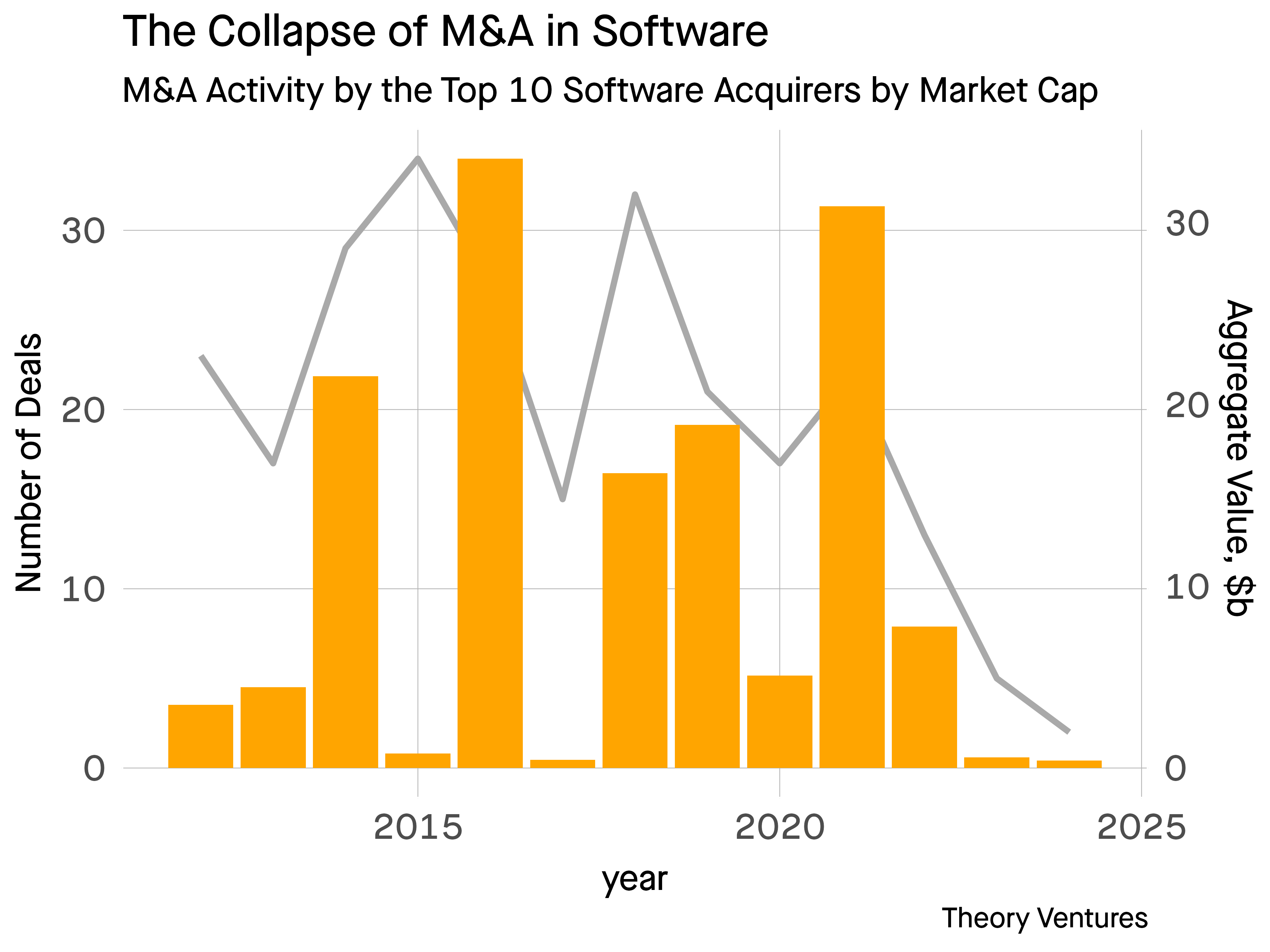
This point is clear & straightforward. Less demand for an asset decreases price. 2023 & 2024 are two of the three lowest in the last 12 years in both activity & value across the ten largest strategic software buyers. 1
But this second point captures a non-obvious second order effect :
> "...more importantly small companies can create a true sense of urgency in big companies. If you're sitting at Amazon or Google and you're meeting these small companies, now you don't have to worry about your competitor buying that company because you know that the government will make it really hard, that gives you time."
If no major incumbent can acquire a smaller company for fear of antitrust, all the incumbents can breathe : they can decide to build a competing product with less risk of being outmaneuvered. The other major technology companies are just as hamstrung.
Admittedly, this second-order effect is less prevalent at the leading edge of AI. Amazon, Microsoft, & Google have structured "acquisitions" [that aren't M&A](https://www.reuters.com/technology/artificial-intelligence/google-hires-characterai-cofounders-licenses-its-models-information-reports-2024-08-02/) : they hire the core team, license the technology, but the majority company continues to operate as a separate entity. If it sounds unusual, it is, a beefed up asset-sale at billion dollar valuations.
However, these types of regulatory gymnastics are not worth it for every transaction & [they are now facing regulatory scrutiny.](https://www.reuters.com/technology/ftc-seeking-details-amazon-deal-with-ai-startup-adept-source-says-2024-07-16/).
If a supermajority of acquirers in purchasing potential are sidelined, the urgency to innovate is lessened. That's why a vibrant M&A market is essential to innovation.
---
1 PitchBook data of the top 10 most active US venture-backed software buyers across the last decade.