---
title: "What do Tariffs Mean for Startupland?"
description: "Discover how new tariffs impact startup growth, revenue \u0026 tech markets. Data shows 48% of US tech revenue comes from abroad - key implications for founders \u0026 VCs."
categories: ["trends"]
keywords: ["tariffs impact startups","startup growth","venture capital","software companies","AI adoption","market uncertainty","Thoma Bravo","technology revenue","protectionism","cost of goods sold"]
ai_summary: "Explore how new tariffs affect startup growth, revenue, and the tech market landscape, influencing AI adoption and investment strategies."
date: 2025-04-03
lastmod: 2026-07-23
canonical_url: https://www.tomtunguz.com/tariffs-startups/
author: "Tomasz Tunguz"
---
The new tariffs have markets down broadly. What do they mean for startups?1
In terms of first order effects, tariffs can impact a startup in two ways : the input costs and consumers' demand.
Most software companies don't import or source critical components of the software from abroad so the [COGS](https://www.investopedia.com/terms/c/cogs.asp) / gross margin structure of the company shouldn't change unless they rely on significant hardware purchases, for example GPUs or robotics components.
Revenue growth, however, is a different story.
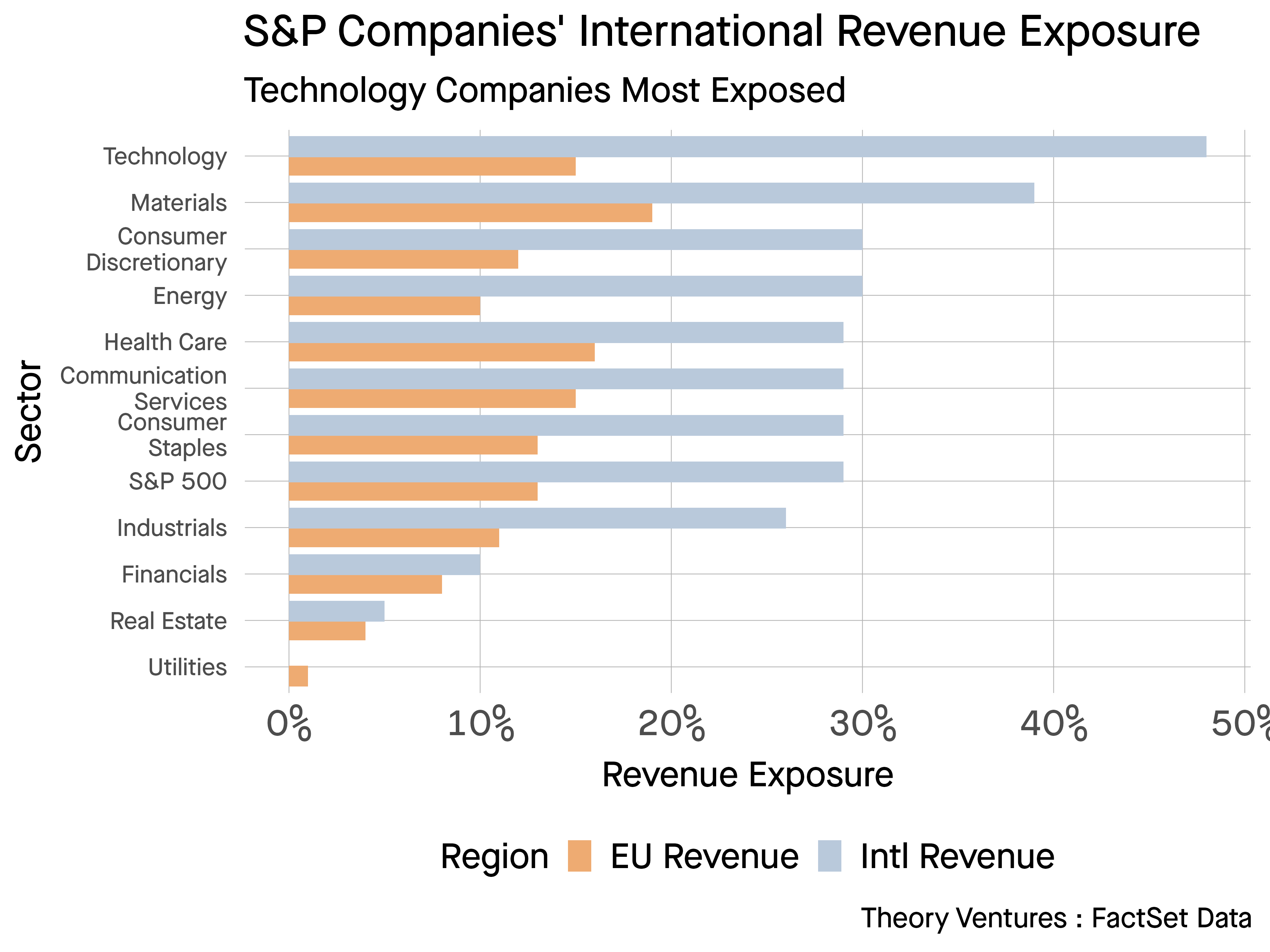
Across the S&P 500, [13% of revenue is generated in Europe](https://www.globalxetfs.com/sector-views-sp-500-sensitivity-to-global-factors/
) and 29% abroad. Technology companies are 15% in Europe and 48% abroad, topping the list of international exposure.
Assuming this trend is broadly true across US companies, we should expect at least uncertainty if not slowing growth or contraction in about one-third or one-half of their businesses.
Uncertainty breeds indecision. Investments into new areas may be challenged, slowing sales cycles, [resulting in pipeline shocks](https://tomtunguz.com/pipeline-sales-cycle/), a phenomenon we witnessed in 2022.
Protectionism, the stated goal of these tactics, may have second order consequences abroad. The Buy American motif has a mirror image that may arise 'Buy European' may shift buyer preferences in the favor of local solutions.
Most software companies maintain healthy gross margins - on average north of 70% - and may be able to bear some of the tariffs, in addition to passing on costs to customers.
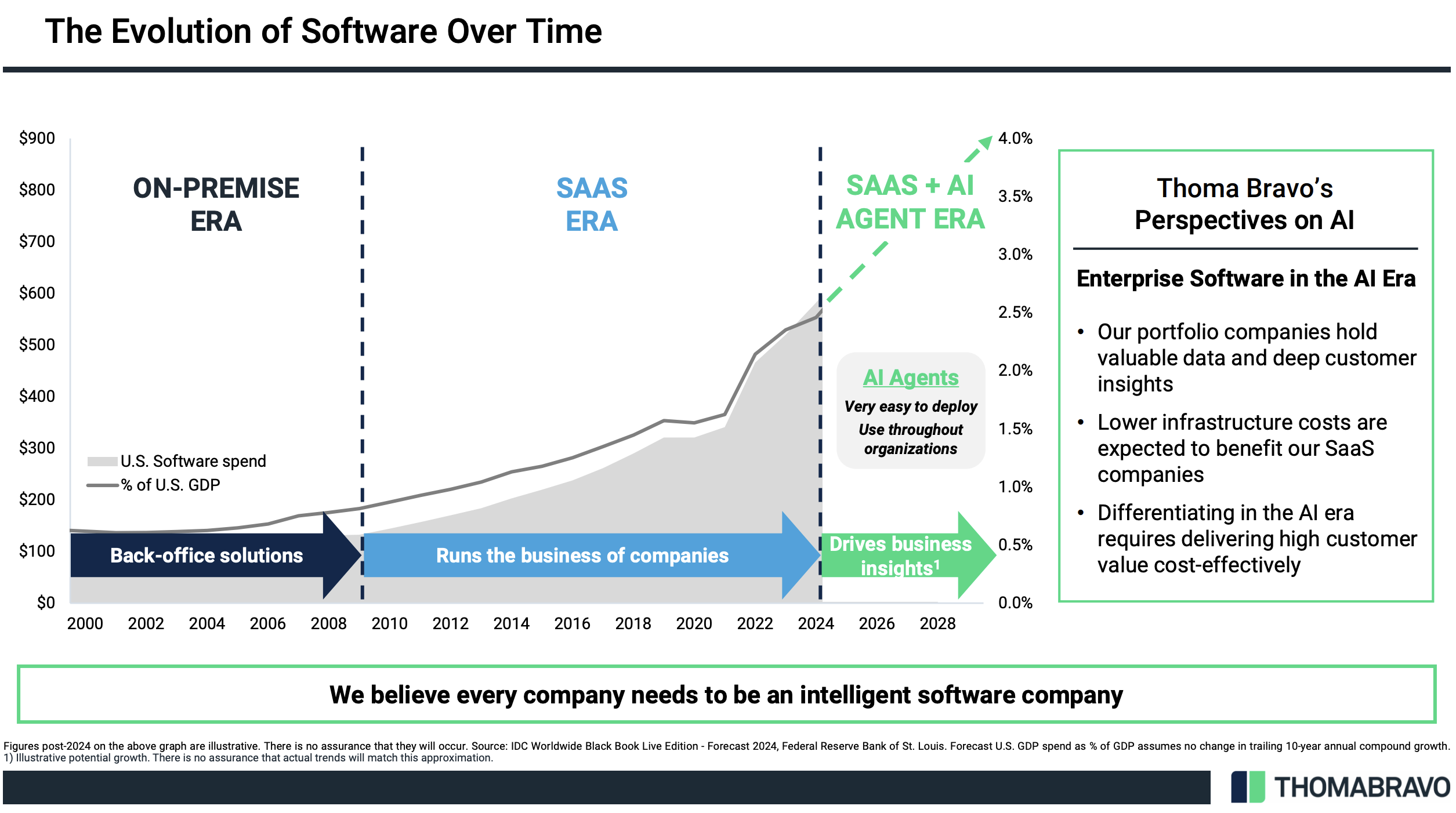
But there's reason to remain optimistic. IT spend represents about 2.5% of GDP & [Holden Spaht at Thoma Bravo published their argument](https://www.linkedin.com/posts/holden-spaht_2025-thoma-bravo-annual-meeting-activity-7312888704270745601-Zs5a/?utm_source=share&utm_medium=member_desktop&rcm=ACoAAAAsKtMBHQPJ9rgxpUs8M6pSxrAYCXIX8oY) for why it will grow to 4% by 2030, creating another approximately $2t in market cap along the way.2
AI's role in reducing the costs will be big part of this shift, and perhaps the overall protectionist environment will accelerate AI adoption further, as companies seek to control what remains in their grasp - their costs - in an environment of tremendous uncertainty.
As for valuations, the 11% decline in the Nasdaq since the beginning of the year isn't enough to offset the exuberance & record setting revenue growth of the current wave of AI companies to materially change the valuation environment - at least not yet.
While new tariffs primarily threaten startup revenue through market uncertainty rather than direct costs, the drive for efficiency in response may accelerate AI adoption, aligning with optimistic long-term growth forecasts for the tech sector.
---
1For a good broader macro overview, [Ray Dalio's perspective is useful.](https://x.com/RayDalio/status/1907489922359132627) as is his book on [Debt Crises](https://www.amazon.com/Big-Debt-Crises-Ray-Dalio/dp/1732689806)
2Assuming a 6x revenue multiple.