On this blog, Twitter is the second largest source of traffic. Twitter yielded 21% of visitors in the last 30 days. Because I suspect that tweets containing my blog’s links don’t reach a very large proportion of my Twitter followers, I’m experimenting with traffic recirculation techniques by retweeting older articles periodically. Of the approximately 150 posts on Svbtle, I have recirculated 30.
Recirculation encompasses the science and tactics of enticing users to read more articles during one session and also increase the number of visits to a site. Understanding recirculation is the key to maximizing the value of content.
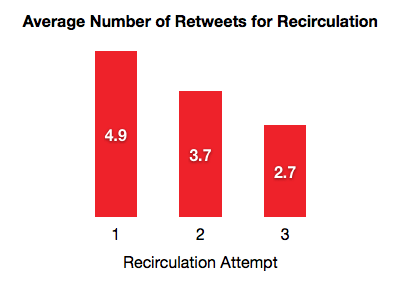
Below is a chart of the average number of retweets a post receives the first, second and third time I tweet it. On average, each subsequent attempt gains about 75% of the previous number of retweets - a very encouraging metric.
Looking at the data more closely, I noticed there are two segments of tweets: those with 1 to 3 initial retweets and those with 5 to 14 initial retweets. Recirculating a moderately successful post, one with about 2 initial retweets, results in about 2 more retweets. But recirculating a very successful post, one with on average 9 retweets, creates a cascade of another 4 retweets. This implies that the initial retweet count is likely a reasonable first-pass leading indicator of recirculation success.
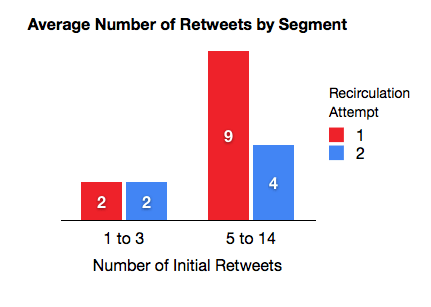The correlation coefficient between the number of tweets during the first recirculation attempt and the second is strong at about 0.70. This suggests I should recirculate every post with greater than about 5 initial retweets programmatically.
I suspect each publication, given its individual characteristics like scale, subject matter, audience engagement, has a certain recirculation pattern. Determining those segments and using the behaviors of those segments to inform recirculation is an essential part of maximizing the publication’s effectiveness.
Also, I suspect that recirculation data is the best way of understanding the type of content a publication’s audience prefers to read.
Next, I aim to research the relationship between retweets, recirculation, mail subscriptions, keywords in a blog post and traffic. When the project is completed, I’ll post the code.